Troubleshooting a Furnace That Won't Turn On
Maintaining comfort in the Southern Utah heat can be both energy-efficient and cost-effective. Emphasize proper insulation, intelligent temperature control, and routine air conditioning upkeep. Make use of passive cooling, shade your windows, and evaluate the advantages of energy efficient ductless systems. Don't overlook the impact of thoughtful outdoor planning, like carefully positioned trees and cooling ground surfaces, which can reduce heat absorption. Want to discover the details of turning your living space into a summer oasis without running your AC constantly and inflating your utility bills? Keep reading!
Essential Points
Grasping the Essentials of Cost-Effective Cooling
Although many believe that maximizing the air conditioner is the sole solution to maintain a cool house during summer, learning about the basics of energy-efficient cooling offers a different view. It's not only about comfort, it's also about energy conservation. Keep in mind that cooling techniques like insulation, shading, and ventilation can substantially lower your energy usage. By insulating your home, you're stopping cool air from escaping, thereby decreasing the need to continuously run your AC. Shading your windows, especially those exposed to sunlight, can decrease heat gain. And ventilation, whether mechanical or natural, helps promote airflow, ensuring a comfortable environment. A more energy-efficient home isn't merely budget-friendly, it's eco-friendly too.
Choosing the Ideal Air Conditioning Unit
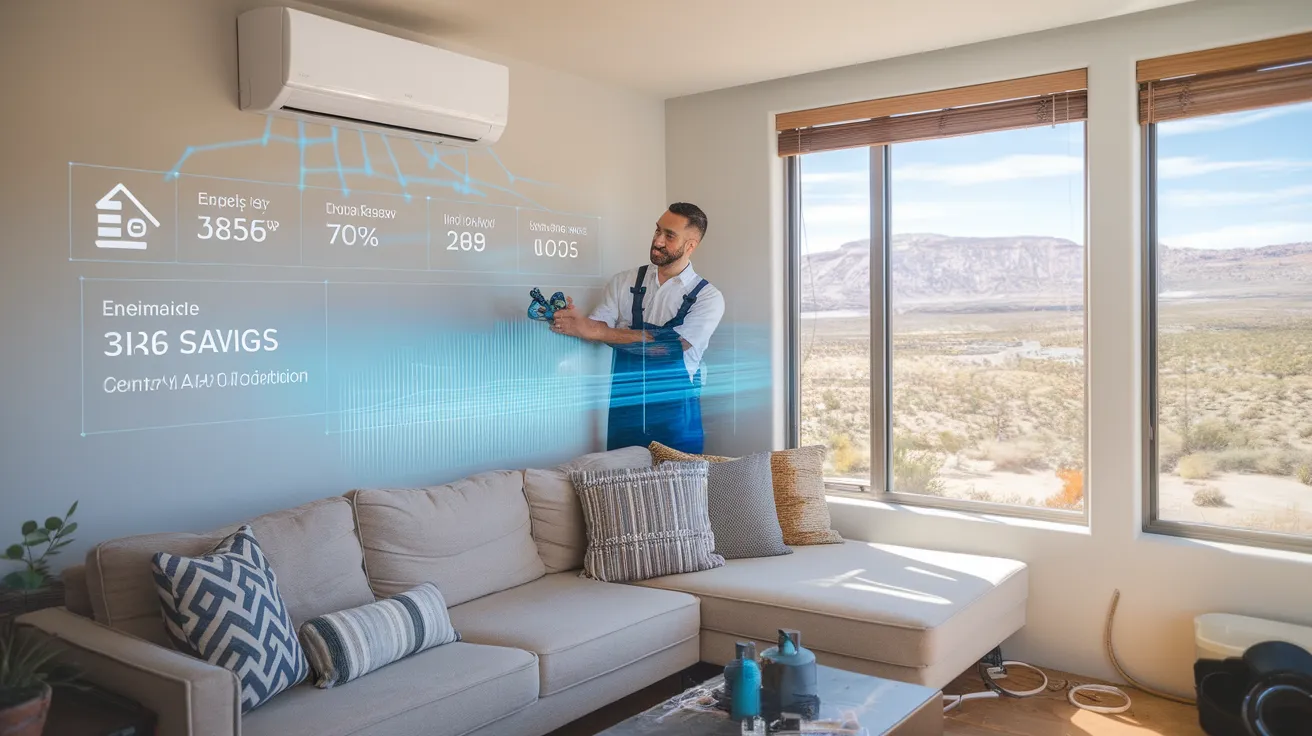
Understanding energy-efficient cooling methods is an excellent starting point. But selecting the proper air conditioning system is essential to optimize these techniques. Selecting between central and ductless is an important consideration. Central air provides whole-house cooling, while ductless units cool specific areas. Both systems offer unique benefits, but ductless systems can be more efficient if certain spaces see limited use. Review efficiency ratings when making your choice. Better ratings mean more energy savings, but may cost more initially. You'll need to weigh the options, but choosing an energy-efficient system will save money long-term. Keep in mind, the right choice helps handle that Southern Utah heat economically.
The Role of Quality Insulation for Cooling Your Living Space
Though it might not be obvious at first, effective insulation serves an essential role in keeping your home cool during the warmest times of the year. Insulation materials function through thermal resistance, reducing the rate of heat transfer from your indoor space to the scorching outdoors. This means that the climate-controlled atmosphere produced by your air conditioning system stays in your home longer, easing the load on your AC unit and saving you money on energy bills. It's crucial to opt for insulation with a high R-value, which indicates greater thermal resistance. From various insulation types, the right insulation can make a substantial improvement in your home's warm-weather comfort and energy performance.
Maximizing the Potential of Natural Ventilation
You can utilize natural ventilation to maintain your home cool and lower your energy bills. By learning about how it works, you can get the most from the advantages of cross-ventilation during the day. Furthermore, adopting a nighttime ventilation approach can deliver significant cooling advantages when temperatures fall.
Exploring Natural Ventilation
Although it might appear complex, understanding natural ventilation can be straightforward. It all comes down to optimizing the airflow in your home to ensure a pleasant environment while decreasing dependence on high-energy air conditioning. The key is recognizing the right time to open your windows and doors to allow fresh air to enter, and the right time to close them to prevent warm air from entering. You'll also want to familiarize yourself with various ventilation strategies that can optimize airflow, such as using fans in strategic locations and making channels for air to move freely. By leveraging the power of natural ventilation, you're not only reducing indoor temperatures, you're also contributing to a more sustainable future.
Getting the Most from Cross-Ventilation
To properly leverage the advantages of natural ventilation, it's important to optimize the benefits of cross-ventilation. This necessitates carefully positioned windows and the application of cross ventilation techniques. When installing windows, choose those that are placed on opposing walls. This establishes a flow path for air to flow freely in and out of your home, thereby cooling it naturally.
Furthermore, you can boost this airflow by keeping open adjacent windows. This encourages a cross breeze that can considerably decrease indoor temperatures. To get the most from the effectiveness, ensure that the windows are free from obstructions, both indoors and outdoors, such as furniture or plants. By paying attention to these elements, you're fully utilizing natural ventilation and lowering your reliance on energy-consuming cooling systems.
Nighttime Ventilation Strategy
Although the warm summer days can be scorching, the nights typically deliver a revitalizing coolness that you can leverage to your advantage. This is where a night cooling method comes into play. By utilizing the power of natural ventilation, you can achieve effective nighttime cooling and increased air circulation.
Initiate by propping open windows and doors once the outside temperature falls below the inside temperature. This encourages cool air to enter and force the warm air out, generating a natural air circulation. Then, as dawn approaches and the temperature starts increasing, shut everything up to trap the cool air inside. Using this simple yet effective strategy can create a considerable difference in maintaining a cozy and power-conscious home during the sweltering Southern Utah summers.
Why Regular AC Maintenance Matters
You might not realize it, but regular AC maintenance plays a pivotal role in avoiding AC breakdowns during the hottest times of the year. Besides improving your AC's functionality, but it's also key to extending the unit's service life. So, let's talk about what makes this crucial to your household's power consumption.
Managing System Capacity Issues
During hot summer days can push your AC system to its limits, routine upkeep can help avoid system failures. Compare your AC similar to a car. Would you begin a lengthy journey without checking the oil, would you? The same holds true for your AC unit. Scheduled inspections can maintain optimal performance, lower the likelihood of breakdowns, and contribute to energy conservation.
Essential preventive actions involve replacing filters each month, maintaining clean coils, and ensuring proper refrigerant levels. Overlooking these crucial maintenance steps can cause inefficiencies, forcing your air conditioning unit to operate inefficiently and increase energy usage. So, give your AC the attention it needs. Regular maintenance not only reduces excessive strain but additionally prolongs its service life.
Boosting AC Performance
To ensure your AC functions at maximum efficiency, regular maintenance should be a key consideration. Neglecting this can result in lower effectiveness and escalating costs. Prevent this from occurring. AC performance guidelines include regularly cleaning or replacing filters, verifying your system runs at optimal levels.
Making improvements to your cooling system is valuable. Using a programmable thermostat allows you to customize cooling times, reducing energy consumption when the house is empty. It's also worth considering fixing leaky ductwork. Unsealed ducts may lose as much as 30% of your AC's efficiency.
To maximize your AC's efficiency, you'll need to keep up with maintenance and consider system enhancement options. Your reward will be a cooler home and more manageable utility expenses this summer.
Prolonging Equipment Durability
In addition to the direct benefits of reduced energy consumption and monetary benefits, consistent AC maintenance also plays a pivotal role in increasing the durability of your equipment. Proper equipment maintenance extends further than addressing issues when they occur; it's about preventing them. By regularly maintaining and checking your AC system, you reduce wear and tear, improve efficiency, and increase its durability. Consider it an commitment to durability. Remember, a properly serviced AC unit performs more efficiently it endures longer. So, don't neglect regular maintenance. It'll ensure optimal system performance, reduce your costs in the long run, and help you beat the Southern Utah heat competently and reliably.
Smart Thermostat: A Game Changer for Energy Saving
If you're searching for read more a reliable way to save energy this summer, a smart thermostat may be the innovation you need. Being able to learn your schedule and adjust temperature settings accordingly, it's a leap beyond conventional thermostats. The benefits of a smart thermostat extend past simple convenience. When utilizing one, you're taking a positive step to improve energy efficiency in your home, and this results in significant energy savings. You can also operate remotely it through an app, offering even more flexibility. Basically, a smart thermostat gives you complete command of your home's energy use, ensuring comfort in the Southern Utah heat without straining your budget.
Smart Landscaping Strategies for Enhanced Cooling and Energy Savings
While a smart thermostat remains an effective way of managing energy use in your home, another effective method lies in smart landscaping. Strategically placing shade trees along the south and west sides of your home can reduce your air conditioning needs significantly. These leafy giants serve as natural shields against the sun's heat, supporting outdoor cooling.
Try adding xeriscaping plants into your landscape. These drought-tolerant plants require less water, helping to preserve this important resource. Additionally, their ability to thrive in warm conditions promotes a more pleasant setting.
In conclusion, steer clear of highly absorbent materials for walkways or patios. Select reflective surfaces as an alternative. They deflect the sun's rays, helping decrease heat around your home and boosting your energy efficiency.
Frequently Asked Questions
How Does Humidity Impact Energy Efficiency in Cooling Across Southern Utah?
Humidity affects your cooling system's energy efficiency. Your system uses more energy when dealing with humid air, leading to higher energy usage. As a result, using a dehumidifier can help reduce your AC's workload and reduce your energy costs.
What Are Some Eco-Friendly Substitutes for Air Conditioning?
Consider ceiling fans and evaporative coolers as eco-friendly options to traditional AC. They're effective, are energy-conscious, and decrease your carbon footprint. It's an efficient, budget-friendly approach for maintaining comfort in Southern Utah.
Is Solar Power Effective for Cooling Solutions
Absolutely, you can use solar power for efficient cooling. Solar cooling systems leverage solar panel efficiency to supply your cooling needs, making it a sustainable, budget-friendly option to standard air conditioning.
How Do Outdoor Temperatures at Night Affect Energy Efficiency?
During cooler evening hours, you have a chance to improve energy efficiency. Take advantage of natural cooling by opening windows, allowing you to minimize reliance on air conditioning. Note that properly handling evening temperature changes is a smart approach to temperature fluctuations.
Tax Benefits Available When Installing Energy-Efficient Cooling Systems
You can qualify for tax incentives when installing power-saving cooling systems. Explore federal and local programs for rebates on installation. This is a smart way to offset costs while reducing your carbon footprint and warm-weather energy expenses.
Closing Remarks
You're all set to conquer the Southern Utah heat this summer! Keep in mind, an energy-efficient cooling system is more attainable than discovering a snowball in the desert. With the right AC, effective insulation, natural ventilation, consistent maintenance, a programmable thermostat, and strategic landscaping, you can enjoy a cool, comfortable home without straining your budget. You're not only saving energy, you're also taking a significant step towards sustainable living.